

 USA
USA
 Canada
 Australia

Introduction
Year-end uncovers a lot of bookkeeping problems that were easy to overlook during the year. Unreconciled accounts, aging invoices, uncategorized credit card transactions, and missing documents can quickly become bigger issues when financial statements need to be finalized, and tax preparation begins. For growing businesses, keeping the books current becomes just as important as keeping up with day-to-day operations.
For a growing U.S. business, the question isn’t simply whether there is too much bookkeeping. It’s whether the internal team is spending time on routine work that someone else could handle reliably. NCSGX Supports businesses with finance and accounting needs, including bookkeeping support, when internal teams need additional capacity.
Key Takeaways
- Learn when to outsource bookkeeping by looking at workload, delayed reconciliations, growing transaction volume, and the amount of routine work your team is carrying out.
- Understand the signs you need to outsource bookkeeping, from books falling behind to owners and senior staff spending too much time on repetitive bookkeeping.
- See which bookkeeping tasks for growing businesses can be outsourced, including reconciliations, transaction categorization, A/P and A/R support, cleanup, and reporting preparation.
- Understand what should remain under your team’s control, including financial decisions, payment approvals, cash management, budgets, and final review.
- Use a practical small business bookkeeping checklist to assess year-end accounting cleanup, define responsibilities, and decide whether outside bookkeeping support should be temporary or ongoing.
What Should You Outsource Before Year-End? A Bookkeeping Checklist for Growing Businesses
Growing businesses don’t always need to hire another full-time bookkeeper to keep up with the numbers. Sometimes, the better question is which parts of the workload can be handed off without giving up control. This guide looks at the bookkeeping tasks worth outsourcing before year-end, the work that makes sense to keep in-house, the signs that your current setup may be stretched, and how to choose outside support that fits your business.
Why Year-End Is the Right Time to Reassess Your Bookkeeping
Year-end brings several demands together. Financial records need to be reviewed, outstanding balances need attention, supporting documents need to be gathered, and tax professionals may start requesting information.
That makes December a poor time to discover that your books have been six weeks behind since October. For some companies, choosing to outsource bookkeeping before year end makes sense because it gives an outside team time to work through routine items before the pressure of tax preparation arrives.
A business that has added employees, opened another bank account, increased credit card activity, or simply taken on more customers may have outgrown the way bookkeeping was handled a year ago. The work itself may not have changed much. The volume has.
The IRS publication 583 notes that good business records help companies prepare financial statements, track income and expenses, and prepare and support their tax returns.
Signs You Need to Outsource Bookkeeping
One of the clearest signs is simple: the books aren’t current. If reconciliations are repeatedly pushed to the next week, transactions remain uncategorized, or financial reports are consistently late; the bookkeeping process is probably carrying more work than the current team can comfortably absorb.
Then look at who is doing the work.
If the owner is reconciling bank accounts at night, a senior employee is entering routine transactions instead of reviewing results, or a CPA receives incomplete records shortly before tax preparation begins, those are practical signs you need to outsource bookkeeping.
None of these automatically means outsourcing is the answer. They do indicate that the current division of work deserves a closer look.
The Bookkeeping Tasks Worth Outsourcing Before Year-End
The best tasks to outsource are usually routine, repeatable, and easy to review. That can free up internal staff without handing over the financial decisions that need to stay with the business. The best bookkeeping tasks to outsource are usually routine, repeatable, and easy to review. That can free up internal staff without handing over the financial decisions that need to stay with the business.
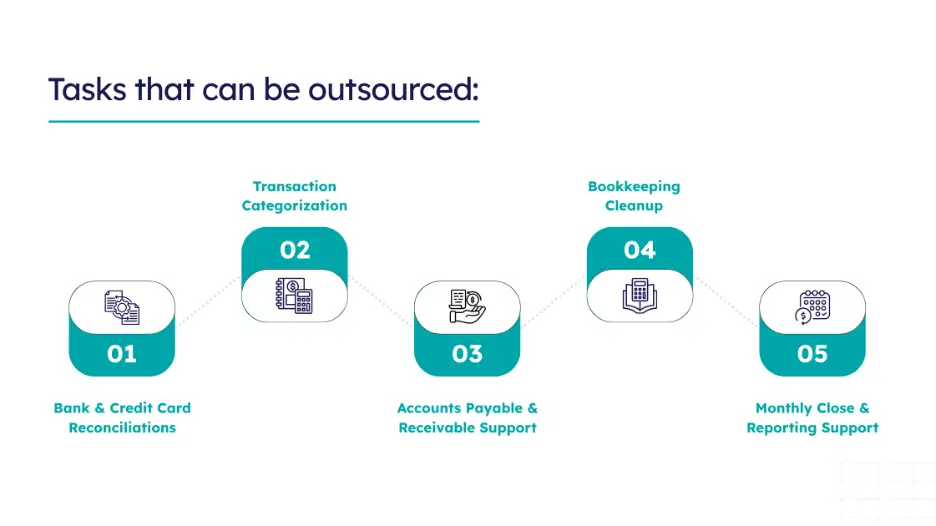
Bank and Credit Card Reconciliations
Reconciliations can become a time drain as the number of accounts and transactions grows. Outsourcing this work gives your internal team more time for reviewing unusual activity and resolving issues instead of spending hours matching routine transactions.
Transaction Categorization
Transaction coding is necessary, but much of it follows established rules. Having routine entries handled externally can reduce the daily workload on owners and accounting staff while leaving exceptions and judgment calls for someone who knows the business.
Accounts Payable and Receivable Support
A/P and A/R involve plenty of recurring work that doesn’t always require management’s direct involvement. Outsourcing AP & AR operations may help the organization get rid of some repetitive work.
Bookkeeping Clean-up
Clean-up is often delayed because current bookkeeping always takes priority. Bringing in outside support for a backlog can help the business deal with old unreconciled items and errors without pulling the internal team away from its regular responsibilities.
Monthly Close and Reporting Support
If the team is struggling to close the books on time, additional support can take routine close work off their plate. That gives the owner, controller, or CPA more time to review the numbers and investigate anything that actually needs attention.
Tasks You Can Still Handle In-House
Outsourcing bookkeeping doesn’t mean outsourcing responsibility.
Some types of tasks should always be handled inside, for example: Approving payments, making significant cash-management decisions, setting up budgets, approving unusual transactions, and deciding how financial information should influence the business.
Final review matters too. Someone who understands the business should be looking at the financial statements and asking whether the numbers make sense.
Think of the distinction this way: a bookkeeping partner may prepare the reconciliation, but management still needs to understand what the reconciliation is telling them.
How to Choose the Right Bookkeeping Partner Before Year-End
The basic way could be asking questions about the relevance of the outsourcing company with USA-related rules and regulations. For a business considering outsourced bookkeeping for small business, it’s also worth deciding whether the need is temporary or something that will continue as the business grows.
Start with the basics. Does the provider understand U.S. bookkeeping and the accounting software your business uses? Can they work within your existing procedures rather than forcing an entirely new process?
For CPA firms, the question is slightly different. The provider needs to fit into the firm’s workflow and deadlines without taking control away from the firm’s professionals. NCSGX’s bookkeeping support, for example, is positioned around working within existing systems and workflows while providing additional bookkeeping capacity.
A Simple Year-End Outsourcing Checklist
Before handing bookkeeping work to an outsourcing firm, take a quick look at where your team is spending its time and where things are falling behind. This small business bookkeeping checklist can help you decide what needs outside support:
- Find the backlog: A growing backlog can make year-end close harder, so identify what has been carried forward and why it hasn’t been cleared.
- Separate tasks from decisions: Mark routine bookkeeping work that can be delegated and financial decisions that should stay internal.
- Gather your records: Have bank statements, credit card records, invoices, payroll records, and other supporting documents ready.
- Set responsibilities: Decide who will handle bookkeeping, who reviews the work, and who approves payments or other financial actions.
- Set deadlines: Agree on reporting timelines and make sure the work is completed ahead of tax-preparation and year-end deadlines.
- Decide the type of support: Determine whether you need a one-time year-end accounting cleanup or ongoing bookkeeping help.
The IRS recordkeeping guide recommends keeping supporting documents for purchases, sales, payroll, and other business transactions because these records provide the information needed to maintain accurate books.
Conclusion
So, what should a business outsource before year-end?
Usually, the best candidates are routine tasks that are taking significant internal time without requiring management-level judgment: reconciliations, transaction processing, A/P and A/R support, cleanup, reporting preparation, and document organization.
The objective isn’t to hand over everything. It’s to separate work that requires business judgment from work that needs to be completed accurately and consistently. If you’re reviewing your bookkeeping capacity before the year-end rush, contacting us can be a starting point for discussing what additional support might fit your existing workflow.
How NCSGX Can Help
NCSGX can help businesses manage their bookkeeping when the internal team is busy or falling behind. This can include regular bookkeeping, account reconciliations, transaction categorization, A/P and A/R support, and year-end clean-up. Your team can continue handling approvals, financial decisions, and final reviews while NCSGX helps with the day-to-day bookkeeping work.
Frequently Asked Questions (FAQ)
1. What bookkeeping tasks should I outsource before year-end?
Routine reconciliations, transaction categorization, A/P and A/R support, cleanup, monthly close work, and document organization are common tasks to outsource.
2. How do I know if my business needs to outsource bookkeeping?
If your books are falling behind, reconciliations aren’t completed on time, or your team spends too much time on routine bookkeeping; it may be time to consider outside support.
3. Is it too late to outsource bookkeeping before the year-end?
Not necessarily. You can still outsource specific work such as cleanup, reconciliations, document organization, or clearing a backlog before year-end.
4. What bookkeeping tasks should I keep in-house?
Payment approvals, cash decisions, budgeting, and other financial decisions that require knowledge of the business are generally better kept in-house.
5. How much does it cost to outsource bookkeeping for a small business?
There is no fixed cost. Pricing usually depends on transaction volume, number of accounts, bookkeeping complexity, cleanup needs, reporting, and how often support is needed.

Rahul Sharma
Rahul Sharma is a Chartered Accountant with over 7+ years of experience in global accounting, bookkeeping, tax preparation, financial reporting, and compliance. At NCSGX, he leads accounting outsourcing operations, manages client engagements, and drives process improvements for international businesses. Through his writing, Rahul shares practical insights on accounting, outsourcing, taxation, and business finance, helping firms and professionals make informed financial and operational decisions.
All Posts