
 USA
USA
 Canada
 Australia

Introduction
Form 1099-DA is changing how digital-asset transactions are documented, making accurate historical records more important than ever. Gross-proceeds reporting generally began for applicable transactions in 2025, while basis reporting requirements expanded for applicable covered digital assets after 2025. However, broker reporting may not capture every acquisition date, original cost, or transfer history. That is why 1099-DA bookkeeping preparation should begin before tax forms arrive. At NCSGX, we understand the value of organized financial records and disciplined bookkeeping processes that help businesses maintain a clearer history of their digital-asset transactions.
Key Takeaways
- 1099-DA bookkeeping preparation is essential because expanded broker reporting does not replace the need to maintain your own complete transaction history.
- Track cost basis crypto transactions by preserving acquisition dates, original costs, quantities, applicable fees, and supporting documentation.
- Maintain a clear digital asset transfer cost basis trail when assets move between wallets or exchanges so their original acquisition history is not lost.
- In crypto bookkeeping 2026, understand whether your assets are covered or noncovered and reconcile broker-reported information with your own records.
- Reconcile crypto records for taxes before filing to identify missing transactions, duplicate entries, unexplained balances, and differences requiring review.
- Accurate records and proper specific identification cost basis crypto documentation can also make Form 8949 digital assets reporting and Schedule D preparation easier where applicable.
Preparing Your Bookkeeping for 1099-DA Cost-Basis Reporting
Form 1099-DA is changing how reportable digital-asset transactions are documented, and good records are becoming even more important. Gross-proceeds reporting generally began for applicable brokered digital-asset sales and exchanges occurring on or after January 1, 2025. For transactions after 2025, basis reporting requirements expand for applicable covered digital assets under the Form 1099-DA rules.
That makes 1099-DA bookkeeping preparation important before you rely on a broker form to tell the full story. Brokers may report more information, but they may not have your complete acquisition and transfer history.
What Actually Changed With Cost-Basis Reporting
The first phase of Form 1099-DA reporting focused on gross proceeds for applicable transactions beginning in 2025. The IRS’s 2026 instructions provide that, for sales effected after 2025, brokers generally report gross proceeds for digital assets and must report basis information for digital assets that are covered securities, subject to applicable exceptions and reporting methods. Basis reporting for noncovered securities is generally not mandatory, although brokers may voluntarily provide it. This is why crypto bookkeeping 2026 requires stronger historical records.
Covered vs. Noncovered Digital Assets, Why It Changes What You Track
For Form 1099-DA purposes, covered status generally depends on applicable acquisition and custody conditions. Under the 2026 instructions, a covered digital asset generally includes one acquired after 2025 in an account where the broker provided custodial services, subject to applicable rules and exceptions. Noncovered assets may include those acquired earlier, transferred in, or otherwise outside the broker’s basis-reporting obligation. While proceeds may still be reported, basis generally is not required for noncovered assets. This makes 1099-DA bookkeeping preparation essential. In crypto bookkeeping 2026, maintain your own acquisition and transfer records even when a broker provides tax information.
The Bookkeeping Gap Brokers Will Not Fill
A broker may not have complete information about an asset’s original acquisition date or cost if it was purchased elsewhere, acquired before the applicable covered-security rules, or moved into the platform. Historical fees, basis adjustments, and records involving multiple wallets can also create gaps.
For that reason, you should reconcile crypto records for taxes using your own transaction history. Treat Form 1099-DA as important information to review, not as a complete replacement for your bookkeeping history.
Step 1 – Pull and Reconcile Every Transaction History You Have
Gather records from centralized exchanges, custodial platforms, wallets, transaction exports, prior tax records, and original purchase documentation. Create one chronological transaction history and compare balances across sources.
To reconcile crypto records for taxes, look for missing acquisition dates, duplicate entries, unexplained balance changes, and transfers that could be mistaken for sales. A movement between accounts should be matched to both its outgoing and incoming records before being classified as a taxable disposition.
Step 2 – Record Acquisition Date and Original Cost for Each Asset
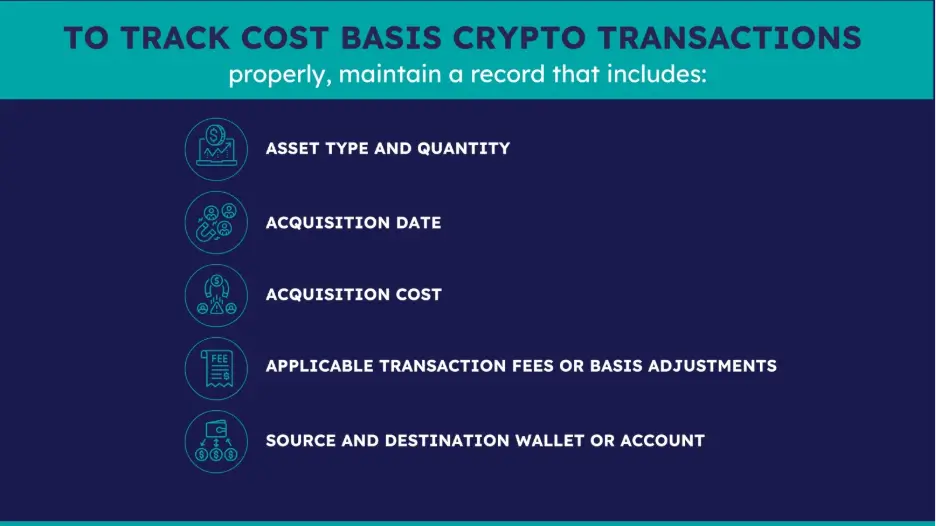
These details can be critical when calculating gain or loss and reviewing broker-reported information. If records are incomplete, reconstructing the history years later can be far more difficult. A consistent system to track cost basis crypto transactions gives you a clearer starting point when Form 1099-DA information arrives.
Step 3 – Track Every Wallet-to-Wallet and Exchange Transfer
A wallet-to-wallet or exchange transfer is not automatically a taxable sale simply because the asset changes location. A sale, exchange, or other taxable disposition is different from a movement of the same asset between accounts you control.
For example, suppose you buy Bitcoin on Exchange A, transfer it to Wallet B, and later move it to Exchange C. The transfers themselves do not automatically create a capital gain. But if your records at Exchange C show only the incoming Bitcoin without its original acquisition history, the basis trail can become difficult to reconstruct. Strong digital asset transfer cost basis records keep that history connected.
Step 4 – Choose One Cost-Basis Method and Apply It Consistently
Specific identification cost basis crypto allows taxpayers to identify the particular digital asset units being sold when applicable IRS identification and recordkeeping requirements are met. If adequate identification is not made, the applicable default treatment may apply, generally including the earliest acquired units. You cannot simply select a preferred lot after a transaction to achieve a better tax result.
Revenue Procedure 2024-28 provided a transitional safe harbor for eligible taxpayers to allocate unused or unattached basis to remaining digital asset units in wallets or accounts as of January 1, 2025, subject to applicable conditions and recordkeeping requirements. The allocation is generally irrevocable for the relevant purposes.
Step 5 – Build a Simple System to Match Broker Forms When They Arrive
When Form 1099-DA arrives, compare it with your internal records. Review:
- Asset and quantity
- Date of disposition
- Gross proceeds
- Acquisition date, where reported
- Covered or noncovered status
- Transferred-in assets
- Missing historical records
Continue to track cost basis crypto transactions after the form is received. Form 1099-DA may contain information that needs correction or adjustment based on your records. Good 1099-DA bookkeeping preparation makes it easier to explain differences to a tax professional.
Common Bookkeeping Mistakes That Cause IRS Mismatches
Common problems include:
- Recording gross proceeds as the taxable gain
- Losing original cost basis after a transfer
- Treating every wallet transfer as a sale
- Ignoring taxable transactions because no Form 1099-DA was received
- Mixing multiple wallet records without a transfer trail
- Failing to review whether reported basis is complete
Poor digital asset transfer cost basis tracking is especially risky because a non-taxable transfer can disconnect an asset from its acquisition history. Avoiding common bookkeeping errors can also help keep tax records consistent.
Getting Ready for Form 8949 and Schedule D
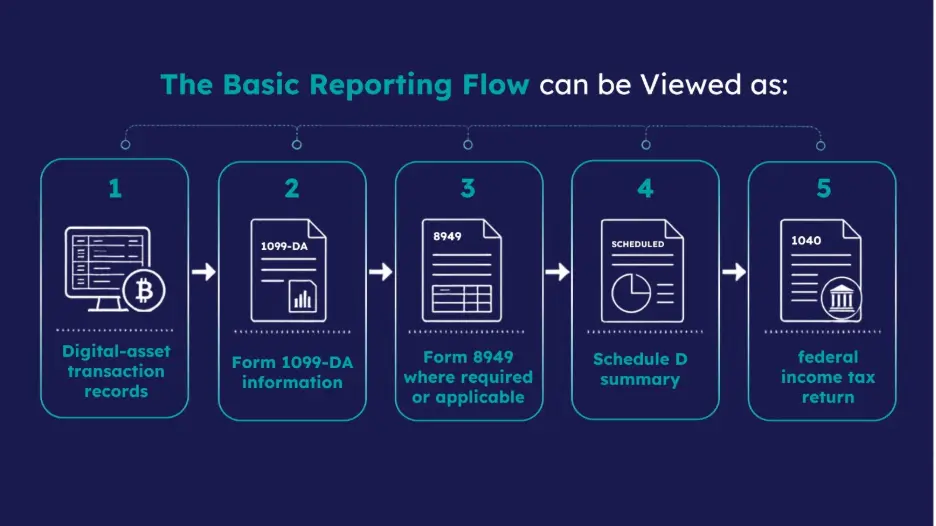
Form 8949 digital assets reporting depends on the transaction and applicable IRS instructions. Form 1099-DA is an information return, while taxpayers may use Form 8949 and Schedule D to report capital asset transactions as required. IRS instructions can permit different reporting treatment depending on the information reported by the broker, so not every transaction must always be separately entered in the same way on Form 8949.
Keeping Form 8949 digital assets records organized before filing season can make reconciliation with broker information and preparation of the federal return easier.
Conclusion
Form 1099-DA reporting makes accurate digital-asset bookkeeping more important, not less. Keep acquisition dates, cost basis, quantities, transfer records, and supporting documentation organized so you can reconcile broker information and prepare for tax reporting. If you need help keeping your digital-asset records accurate and organized, contact us for professional bookkeeping support.
How NCSGX Can Help
Managing digital-asset transactions across multiple wallets and platforms can make bookkeeping challenging. NCSGX can help organize transaction histories, maintain supporting records, reconcile accounts, and identify missing information, giving you cleaner records for tax reporting. With professional bookkeeping and accounting services, you can keep your digital-asset records organized and ready for review when Form 1099-DA arrives.
Frequently Asked Questions (FAQ)
1. When does cost basis reporting on Form 1099-DA actually start?
Basis reporting generally applies to covered digital assets sold or exchanged after December 31, 2025. Gross-proceeds reporting began for applicable transactions in 2025.
2. What is a "covered security" for digital assets, and why does it matter for my books?
A covered digital asset generally meets applicable acquisition and custodial conditions. Covered status matters because brokers generally must report basis, while noncovered assets may not have mandatory basis reporting.
3. Will my exchange calculate my gains and losses for me once 1099-DA basis reporting begins?
Not necessarily. Form 1099-DA may provide proceeds and basis information, but your broker may not have your complete transaction and transfer history.
4. Do I need to do anything differently if I don't move crypto between wallets or exchanges?
Yes. Keep acquisition dates, cost basis, quantities, and supporting records even if you use only one platform. Good crypto bookkeeping 2026 records still matter.
5. What's the biggest bookkeeping mistake to avoid before cost basis reporting begins?
Do not lose the connection between an asset and its original acquisition history. Maintain accurate basis, acquisition dates, quantities, and transaction records.
6. What should I have ready before the 2027 filing season?
For 2026 transactions, keep complete transaction histories, acquisition and basis records, transfer documentation, and Forms 1099-DA. These records can support Form 8949 digital assets reporting and Schedule D preparation where applicable.

Rahul Sharma
Rahul Sharma is a Chartered Accountant with over 7+ years of experience in global accounting, bookkeeping, tax preparation, financial reporting, and compliance. At NCSGX, he leads accounting outsourcing operations, manages client engagements, and drives process improvements for international businesses. Through his writing, Rahul shares practical insights on accounting, outsourcing, taxation, and business finance, helping firms and professionals make informed financial and operational decisions.
All Posts