
 USA
USA
 Canada
 Australia

Introduction
Choosing between cash-basis vs accrual bookkeeping has become an important decision for many U.S. business owners in 2026. Recent IRS guidance, inflation-adjusted gross receipts thresholds, and inventory accounting rules are causing companies to reevaluate whether their current bookkeeping method still fits their operations and growth plans.
At NCSGX, businesses often seek clarity on how IRS Publication 538 and IRC Sections 446 and 471 affect their accounting method choice. Understanding these rules can help small and medium-sized businesses choose the right Bookkeeping Services that support accurate financial reporting, tax compliance, and future expansion.
Key Takeaways
- cash method accounting IRS rules 2026 generally allow eligible businesses to recognize income when received and expenses when paid.
- The accrual accounting threshold $32 million is a key factor in determining whether a business can continue using the cash method under current IRS guidance.
- small business bookkeeping method selection should consider inventory, financing needs, monthly reporting, and future growth plans.
- Understanding when to switch from cash to accrual can help avoid IRS compliance issues and improve financial visibility.
- Tax law changes for small business accounting have made it more important to review accounting methods annually and confirm eligibility before filing.
Cash-Basis vs Accrual Bookkeeping – Which Fits Your Business After Recent Tax Law Changes?
Choosing between cash-basis vs accrual bookkeeping has become more important for U.S. business owners in 2026. Many small businesses are reevaluating their accounting method because of recent IRS rules, inflation-adjusted gross receipts thresholds, and growing financing requirements.
Under IRS Publication 538 and IRC Sections 446 and 471, the bookkeeping method you use affects how income and expenses are reported for tax purposes. The right choice depends on inventory, revenue size, growth plans, and whether your business needs GAAP-style financial reporting.
Quick Answer: Which Method Should You Use in 2026?
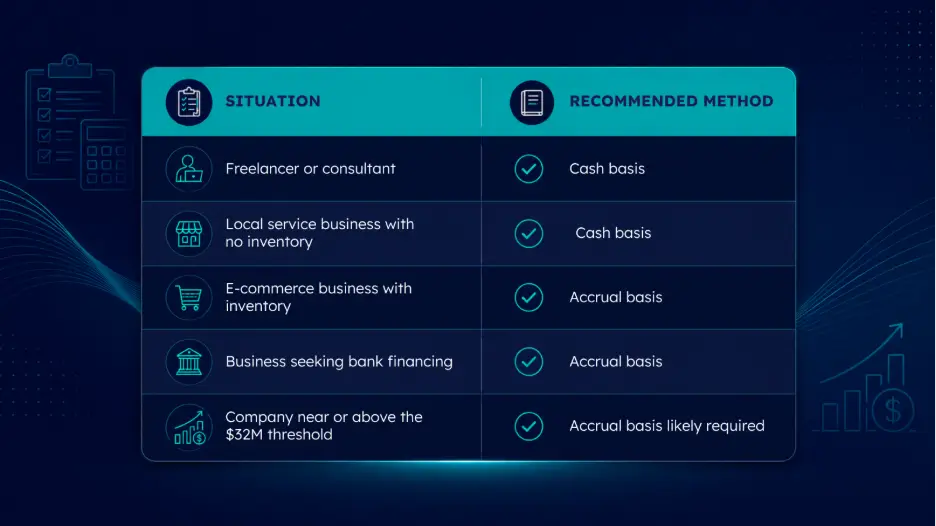
For most freelancers and service businesses without inventory, cash basis remains the simplest option. However, businesses that carry inventory, seek outside investment, or approach the inflation-adjusted gross receipts threshold may benefit from or be required to use accrual accounting.
Cash-Basis Bookkeeping: How It Works and Who It Helps
Under the cash method, income is recorded when received, and expenses are recorded when paid. This approach is specifically described in IRS Publication 538.
Best for:
- Freelancers
- Consultants
- Professional service firms
- Small local businesses without inventory
- New businesses with straightforward transactions
Advantages:
- Simpler bookkeeping
- Easier cash flow tracking
- Lower administrative burden
- Potential tax deferral when receivables remain unpaid
For many small businesses, the cash method accounting IRS rules 2026 still provide significant flexibility. Businesses that qualify under the gross receipts test may continue using the cash method even if they have some inventory, depending on how inventory is treated under current IRS guidance.
Companies using QuickBooks or Xero often find cash-basis reporting easier to manage during the early stages of growth.
Accrual Bookkeeping: How It Works and When It’s Required
Under the accrual method, income is recorded when earned, and expenses are recorded when incurred, regardless of when cash changes hands.
Best for:
- E-commerce businesses
- Manufacturers
- Wholesalers
- Companies with significant inventory
- Businesses seeking bank loans or investors
Advantages:
- More accurate profitability reporting
- Better matching of revenue and expenses
- Stronger financial statements
- Improved budgeting and forecasting
Businesses with inventory should review IRC (Internal Revenue Code) Section 471 carefully. Eligible small business taxpayers may still use the cash method, while others may be required to adopt accrual accounting depending on the IRS rules and gross receipts test.
If your company invoices customers and waits weeks or months for payment, accrual accounting often provides a clearer picture of business performance and supports more informed financial decisions through professional Accounting Services.
Key 2026 Tax Law Changes That Affect Your Choice
The most important development is the inflation-adjusted gross receipts threshold used to determine eligibility for the cash method.
Important 2026 IRS Update
Approximate threshold : $32 million
Applies for : 2026 eligibility review
Threshold is inflation-adjusted and may change in future years.
Businesses should confirm the exact annual amount before filing.
Key rules to understand:
- IRC Section 446 requires businesses to use a method that clearly reflects income.
- IRC Section 471 governs inventory accounting requirements.
- IRS Publication 538 explains permissible accounting methods.
- The gross receipts threshold is adjusted for inflation and may change in future years.
- Businesses should confirm the exact annual threshold with current IRS guidance before filing.
These tax law changes for small business accounting affect both new businesses and established companies that have experienced rapid growth.
How to Decide: A Practical Checklist for U.S. Businesses
Use this checklist during your small business bookkeeping method selection process:
- Do you carry inventory?
- Do you invoice customers and wait for payment?
- Do lenders request GAAP-style statements?
- Are your gross receipts approaching the threshold?
- Do you need detailed profitability by month?
- Are you planning rapid growth or outside investment?
Generally:
- Mostly “No” answers suggest cash basis may be sufficient.
- Several “Yes” answers suggest accrual accounting may provide better financial reporting and compliance.
Many businesses also adopt real-time bookkeeping practices to monitor cash flow and profitability more accurately, regardless of which accounting method they use.
Switching Methods: When and How to Change
Understanding when to switch from cash to accrual is critical. Common triggers include:
- Gross receipts approaching the threshold
- Inventory becoming a significant part of operations
- Bank financing requirements
- Outside investor requests
- Multi-location expansion
Businesses considering when to switch from cash to accrual should coordinate with a qualified tax professional before making the change.
Conclusion
Choosing the right cash-basis vs accrual bookkeeping method depends on your inventory, growth plans, financing needs, and eligibility under current IRS rules. Reviewing your accounting method regularly can help you stay compliant while giving you a clearer picture of your business’s financial health.
If your business is approaching the accrual accounting threshold $32 million or you’re unsure which method best fits your operations, it’s worth reviewing your books before tax season. For professional guidance tailored to your business, contact us to discuss your bookkeeping and accounting needs.
How NCSGX Can Help
Choosing the right bookkeeping method is easier when you have experienced professionals guiding you through the latest IRS requirements. At NCSGX, we help U.S. businesses evaluate whether the cash or accrual method best fits their operations, industry, and long-term growth plans while maintaining accurate, compliant financial records.
From day-to-day bookkeeping to financial reporting and accounting method guidance, our team provides practical support tailored to your business needs. Whether you’re starting out, managing inventory, or preparing for expansion, we help you build a reliable financial foundation so you can focus on growing your business.
Frequently Asked Questions (FAQ)
1. Cash-Basis vs. Accrual Bookkeeping Under 2026 Rules
Under the 2026 IRS rules, eligible small businesses may continue using the cash method, while businesses with inventory or more complex operations may need to use accrual accounting.
2. Can I use cash basis if I have inventory?
Possibly. Under current IRS rules, some qualifying small businesses with average annual gross receipts below the applicable threshold may still use the cash method while treating inventory in a simplified manner. Review IRS Publication 538 and IRC Section 471 for your specific situation.
3. Does the $32M rule apply to sole proprietors?
Yes, the gross receipts test applies broadly to eligible taxpayers, including sole proprietorships, partnerships, and corporations. The calculation is based on average annual gross receipts under the applicable IRS rules.
4. What happens if I accidentally use the wrong method?
text…
5. Can I keep accrual books internally but file taxes on cash basis?
Yes, many businesses maintain accrual-based management reports for operational purposes while filing tax returns using the cash method if eligible. This approach often requires proper reconciliation between internal records and tax reporting.

Rahul Sharma
Rahul Sharma is a Chartered Accountant with over 7+ years of experience in global accounting, bookkeeping, tax preparation, financial reporting, and compliance. At NCSGX, he leads accounting outsourcing operations, manages client engagements, and drives process improvements for international businesses. Through his writing, Rahul shares practical insights on accounting, outsourcing, taxation, and business finance, helping firms and professionals make informed financial and operational decisions.
All Posts