
 USA
USA
 Canada
 Australia

Introduction
Accurate GST/HST bookkeeping Canada businesses can rely on is about more than filing a return on time. It helps you stay compliant with CRA rules, protect cash flow, make tax filing easier, and reduce the risk of penalties or interest.
For small businesses, startups, contractors, and online sellers, GST/HST can get messy fast if sales, expenses, and receipts are not tracked properly. The good news is that once you understand what to record, how to classify transactions, and when to file, GST/HST becomes much easier to manage year-round. Businesses across Canada also turn to NCSGX for reliable bookkeeping and accounting support that helps keep their GST/HST records organized, accurate, and CRA compliant.
Key Takeaways
- GST/HST bookkeeping Canada involves accurately tracking sales, GST/HST collected, business expenses, and tax paid on eligible purchases throughout the year.
- Businesses should monitor the GST/HST small supplier threshold of $30,000 to determine when registration becomes mandatory or whether voluntary registration may be beneficial.
- Keeping accurate records of input tax credits helps reduce the amount of net tax payable and ensures eligible GST/HST can be recovered.
- Understanding the difference between zero-rated vs exempt supplies is essential because it affects whether GST/HST is charged and whether input tax credits can be claimed.
- Maintaining valid ITC documentation and records, such as invoices and receipts containing the required CRA information, is necessary to support ITC claims during a review or audit.
- Knowing your GST/HST filing periods and deadlines helps you file returns and make payments on time, reducing the risk of interest and penalties.
GST/HST Bookkeeping in Canada – What Every Business Must Track
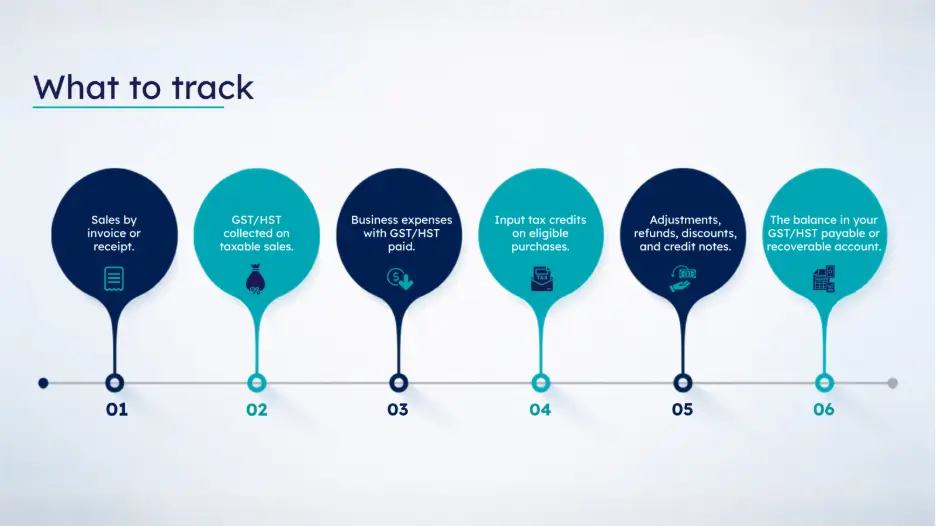
Accurate GST/HST bookkeeping Canada practices are essential for every business that collects sales tax or plans to register for GST/HST. Whether you run a startup, operate as a self-employed professional, or manage a growing small business, keeping reliable GST/HST records helps you stay compliant with Canada Revenue Agency (CRA) requirements, improves cash flow management, and makes filing your returns much easier.
Good bookkeeping also reduces the risk of costly errors, interest charges, and penalties. By recording sales, expenses, and input tax credits throughout the year instead of waiting until tax season, you’ll always know how much tax you’ve collected, what you can recover, and what you owe. This guide explains the essentials of GST/HST bookkeeping Canada using the latest CRA guidance so you can manage your business with confidence.
When you must register, and when it’s optional
Most businesses must register for GST/HST once their taxable supplies exceed the GST/HST small supplier threshold of $30,000 in a single calendar quarter or over four consecutive calendar quarters, subject to CRA registration rules. Once registered, you must charge the correct GST/HST on taxable supplies, file returns on time, and keep CRA-compliant records.
Businesses below the GST/HST small supplier threshold can choose to register voluntarily. This can be beneficial if you regularly incur GST/HST on business expenses because registering allows you to claim eligible input tax credits. Before registering voluntarily, consider whether the additional filing responsibilities fit your business needs.
The two figures at the heart of every return
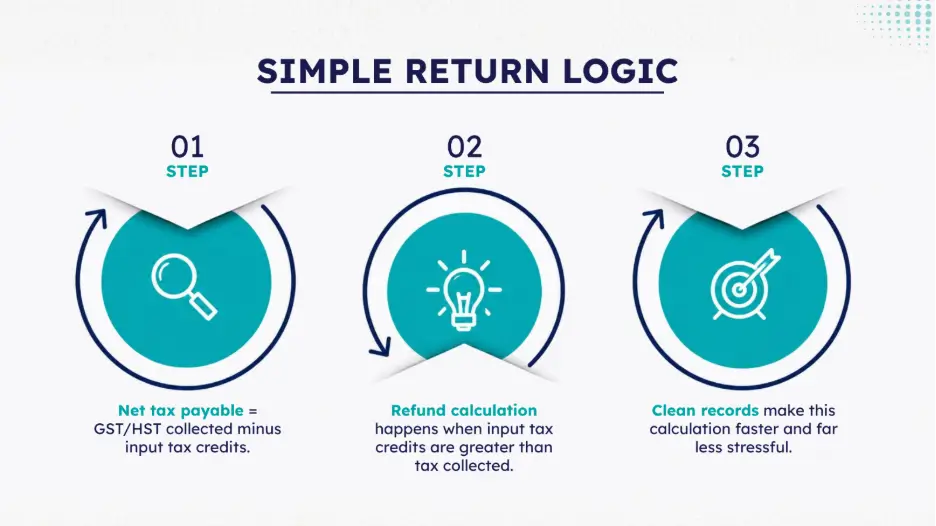
Every GST/HST return comes down to two amounts: tax collected from customers and input tax credits claimed on eligible business purchases. The difference between those amounts is your net tax.
If you collect more GST/HST than you paid on eligible expenses, you usually remit the balance. If you Input tax credits are larger than the tax you collected, you may get a refund or have a net credit carried forward.
| Track | Description |
|---|---|
| GST/HST Collected | Tax charged to customers on taxable sales. |
| Input Tax Credits | GST/HST paid on eligible business purchases. |
Charging the right rate
Canada has both GST-only provinces and HST provinces, and the rate you charge depends on the place-of-supply rules and where the sale is considered to happen. Charging the wrong rate can create bookkeeping errors, customer disputes, and return corrections later.
The exact rate can vary depending on the province or territory involved, so businesses need to confirm the tax treatment before invoicing. This is especially important for service businesses, online sellers, and companies that sell across multiple provinces.
Taxable, zero-rated, and exempt supplies
Taxable supplies are sales on which GST/HST applies at the appropriate rate. Zero-rated supplies are taxable, but the rate is 0%, which means you do not charge tax but may still claim input tax credits on related expenses.
Exempt supplies are different: no GST/HST is charged, and input tax credits generally cannot be claimed on related expenses. A common example is a business that sells both taxable services and exempt services, which must separate the two carefully in the books.
| Supply Type | GST/HST Charged? | Can You Usually Claim ITCs? | Example |
|---|---|---|---|
| Taxable | Yes | Yes, if eligible | Most goods and many services. |
| Zero-rated | No, at 0% | Yes | Certain exported goods or services. |
| Exempt | No | Usually no | Certain financial or residential rental supplies. |
What makes an input tax credit valid
Input tax credits allow GST/HST-registered businesses to recover the GST/HST paid on eligible business purchases and operating expenses. However, not every expense qualifies. To claim an ITC, the purchase must generally be for business use, and you must have sufficient supporting documentation as required by the CRA.
Keeping valid ITC documentation and records is just as important as tracking the expense itself. This includes invoices and receipts showing details such as the supplier’s information, the GST/HST charged, and the amount paid. Missing or incomplete records are one of the most common reasons ITC claims are denied during a CRA review.
Reporting periods and filing deadlines
GST/HST filing periods can be monthly, quarterly, or annual, depending on how your business is set up. The filing deadline generally depends on your reporting period, and payment is usually due on the same schedule.
The CRA also charges interest and may apply penalties if returns or payments are late. That is why GST/HST filing periods and deadlines should be built into your monthly bookkeeping routine, not left until the last day.
Filing Frequency
- Monthly filing suits businesses that want tighter cash-flow control.
- Quarterly filing is common for many small and medium-sized businesses.
- Annual filing may work for some smaller registrants, but it still requires solid year-round records.
- Late filing can lead to interest, penalties, and extra cleanup work.
Records you must keep and for how long
The CRA requires businesses to keep complete and accurate records supporting their GST/HST returns. These records typically include sales invoices, purchase invoices, expense receipts, bank and credit card statements, import or export documents, and digital bookkeeping records. Proper recordkeeping also supports valid ITC documentation and records when claiming eligible input tax credits.
In most cases, businesses must keep their records for at least six years from the end of the last tax year they relate to, unless the CRA authorizes otherwise. Organized records not only support CRA compliance but also make audits, financial reporting, and future tax filings much easier. Digital bookkeeping tools can make storing invoices, receipts, and supporting documents much easier. Our article on Virtual Bookkeeping explains how Canadian businesses securely manage financial records online.
Common GST/HST bookkeeping mistakes to avoid
Even small bookkeeping errors can lead to incorrect GST/HST returns, missed input tax credits, or unnecessary CRA assessments. Reviewing your records regularly and following consistent bookkeeping practices can help you avoid costly mistakes.
Common GST/HST bookkeeping mistakes include:
- Missing or losing receipts needed to support ITC claims.
- Charging the wrong GST/HST rate based on the place-of-supply rules.
- Claiming input tax credits without valid ITC documentation and records.
- Mixing personal and business expenses in the same accounts.
- Missing GST/HST filing periods and deadlines, resulting in interest or penalties.
Following a regular bookkeeping routine helps keep your records accurate, supports CRA compliance, and makes filing GST/HST returns much less stressful. Many GST/HST mistakes begin with incomplete or outdated books. If your records have fallen behind, our guide on Bookkeeping cleanup explains how to get your financial records back on track.
Conclusion
Keeping accurate GST/HST bookkeeping Canada records throughout the year makes it easier to stay compliant with CRA requirements, manage cash flow, and file your GST/HST returns with confidence. Consistent recordkeeping also helps you maximize eligible input tax credits while reducing the risk of errors and penalties.
Rather than waiting until filing season, make GST/HST bookkeeping part of your regular business routine. If you need expert guidance or support with your bookkeeping and GST/HST obligations, contact us to learn how our team can help keep your business organized, tax-ready, and CRA compliant.
How NCSGX Can Help
NCSGX helps Canadian businesses simplify GST/HST bookkeeping with accurate transaction recording, input tax credit tracking, monthly reconciliations, cloud-based bookkeeping, and tax-ready financial reporting. By maintaining CRA-compliant records throughout the year, our team helps businesses stay organized, streamline GST/HST filing, and focus more on growing their business with confidence.
Frequently Asked Questions (FAQ)
1. Do I need to register for GST/HST as a small business in Canada?
You generally must register if your taxable revenues exceed the GST/HST small supplier threshold of $30,000. If you’re below the threshold, registration is usually optional, but voluntary registration may let you claim eligible input tax credits.
2. What's the difference between GST and HST?
GST is a 5% federal tax, while HST combines the federal GST with the provincial sales tax into one rate in participating provinces. The rate you charge depends on where your supply is considered to take place.
3. What are input tax credits and what can I claim them on?
Input tax credits (ITCs) let GST/HST-registered businesses recover the GST/HST paid on eligible business expenses, such as office supplies, software, commercial rent, and professional services, provided the purchases are supported by proper records.
4. What records do I need to keep for GST/HST, and for how long?
Keep sales invoices, purchase invoices, receipts, bank statements, and other records supporting your GST/HST returns. In most cases, the CRA requires these records to be retained for at least six years.
5. How often do I have to file a GST/HST return?
Depending on your revenue and CRA-assigned reporting period, you may file your GST/HST return monthly, quarterly, or annually. Filing and paying on time helps you avoid interest and penalties.
6. What's the difference between zero-rated and exempt supplies?
Zero-rated supplies are taxed at 0%, allowing you to generally claim input tax credits. Exempt supplies are not subject to GST/HST, and you generally cannot claim ITCs on related expenses.