
 USA
USA
 Canada
 Australia


Introduction
Month-end closing is more than simply reconciling a bank account. It involves reviewing transactions, account balances, taxes, and financial reports to ensure the period is complete before finalizing it in Xero. For Canadian businesses, a consistent month-end close checklist can help identify errors, keep records organized, and support more reliable financial reporting. NCSGX supports Canadian businesses with finance and accounting solutions, making accurate and well-managed financial records an important part of effective business operations.
Key Takeaways
- Reconcile every active bank, credit card, and payment account against available statements.
- Review sales, receivables, bills, expenses, and payables to confirm transactions are complete and recorded in the correct period.
- Check GST/HST and applicable provincial tax activity against underlying transactions and tax codes.
- Review key balance sheet accounts and month-end financial reports before recording final adjustments.
- Approve, lock, and archive the completed period once the review is finished.
A Month End Close Checklist for Canadian Businesses Using Xero
Month-end closing is more than simply reconciling a bank account. A reliable close requires you to review transactions, customer and supplier balances, taxes, payroll, balance-sheet accounts, and financial reports before finalizing the period in Xero. Following a consistent month-end close checklist helps Canadian businesses identify errors earlier, maintain cleaner records, and produce financial information that management and advisors can rely on.
What a Completed Month-End Close Should Achieve
A properly completed close should leave the business with accurate account balances, reviewed transactions, and reliable financial information for management, tax, and reporting purposes. It should also make it easier to investigate unusual movements before they carry into the next period. Consistent bookkeeping helps create the structure needed to keep financial records organized and ready for regular review.
The goal of a month-end close checklist is not simply to mark tasks as complete. Each step should provide evidence that the records for the period are reasonably complete, supported, and reviewed. By the end of the process, outstanding items should be identified, and the business should know which balances still require follow-up.
Prepare the Records and Set a Cutoff Date
Start by defining the last day of the accounting period and using it as a clear cutoff date. Transactions that belong to the month should be available for review before the close is finalized.
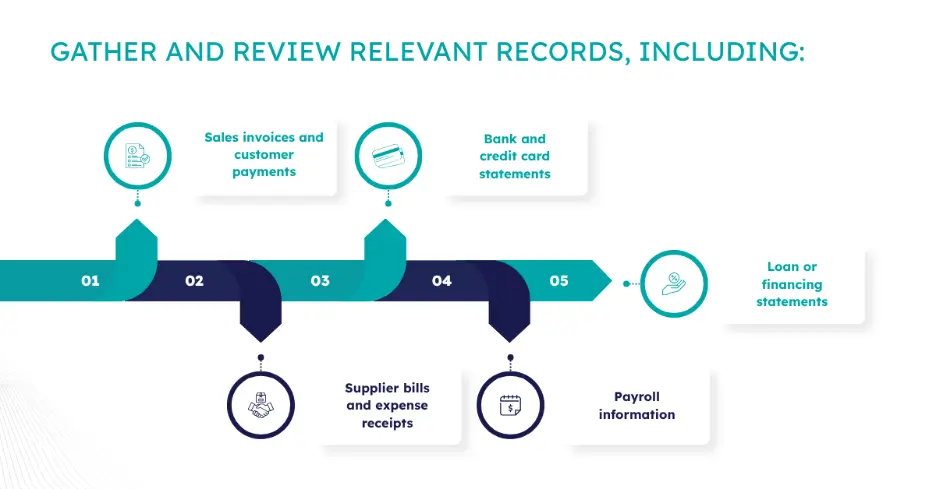
Check whether any transactions have been received but not entered into Xero. Addressing missing or incorrect entries promptly can also help prevent the need for more extensive bookkeeping cleanup later. A clear cutoff also helps prevent the current month’s activity from being mixed with transactions that belong to the following period.
Reconcile Bank, Credit Card and Payment Accounts in Xero
Bank reconciliation in Xero should cover every account used to receive, hold, or pay business funds. Compare Xero transactions and statement lines with the actual bank, credit card, or payment account records.
When using Xero’s Reconcile period process, the period cannot be closed until the balances match and included transactions are reconciled. For credit card accounts, opening and closing balances may need to be entered as negative amounts, where applicable.
Completing this review carefully is a core part of a reliable Xero month-end close because unexplained differences can affect both account balances and later reporting.
Complete Sales, Customer Payments and Receivables
Review sales activity to confirm that invoices, customer payments, credit notes, and other adjustments have been recorded completely. Pay particular attention to sales near the month-end cutoff date.
Review outstanding receivables and investigate unusually old balances. Also check for customer payments or credits that remain unapplied because these can distort the receivables balance.
Confirm that sales belong to the correct accounting period. For example, a transaction should not be moved into another month simply because payment was received earlier or later unless that treatment is appropriate for the business’s accounting and tax basis.
Complete Bills, Expenses and Payables
Next, review supplier bills, business expenses, reimbursements, credit notes, and unpaid amounts. Confirm that bills expected for the period have been entered and that supporting documents are available where needed.
Look specifically for duplicate expenses, missing supplier invoices, or payments that have been recorded more than once. Review unusual expense categories and ensure costs have been assigned to the correct accounts.
The timing of expenses also matters. Costs should be reviewed to confirm they belong to the correct accounting period before the books are finalized. This makes the payable balance and the related month-end financial reports more useful for decision-making.
Reconcile Payroll and Other Balance-Sheet Accounts
Payroll should be reviewed against payroll records and the amounts posted to the relevant liability and expense accounts. Investigate balances that remain outstanding unexpectedly.
Also review other important balance-sheet accounts, including:
- Loans and financing balances
- Shareholder or owner accounts, where applicable
- Sales tax accounts
- Clearing or suspense accounts
- Other asset and liability accounts
Ask whether each balance is supported by a statement, schedule, transaction detail, or other documentation. Clearing and suspense accounts deserve particular attention because unexplained balances may indicate transactions that have not been properly classified or completed. A structured accounting process can also help ensure that important liability, asset, payroll, and other balance sheet accounts are reviewed consistently throughout the year.
Review GST/HST and Applicable Provincial Sales Taxes
Review GST/HST activity against the underlying sales, purchases, tax codes, and accounting records rather than relying only on the final tax balance. Check for transactions using an incorrect tax treatment and investigate unusual changes in tax collected or recoverable amounts.
Businesses should also review applicable provincial sales taxes based on their activities and jurisdiction. The exact requirements can differ depending on where the business operates and what it sells.
A strong Canadian bookkeeping checklist includes checking tax activity monthly, even when the business files GST/HST returns quarterly or annually. Filing frequency does not remove the benefit of identifying coding or transaction errors before they accumulate. The CRA requires businesses to keep GST/HST records that support their returns and claims, including relevant sales and purchase invoices and other business records.
Post Adjustments and Review Xero’s Reconciliation Reports
Record adjustments only after the underlying records and account balances have been reviewed. Adjustments may be needed for items identified during the close, but they should be supported and appropriately authorized.
Before finalizing the Xero month-end close, review Xero’s Reconciliation Reports and other relevant reports for unreconciled or unusual items. Xero’s reconciliation report pack can include the Trial Balance, aged receivables and payables, bank reconciliation summaries, fixed asset reconciliation, general ledger exceptions, and journal reports.
These month-end financial reports can help identify balances that do not appear consistent with supporting records. Investigate exceptions before the period is approved rather than automatically carrying them into the next month.
Approve, Lock and Archive the Closed Month
The final step is to complete the review and obtain the appropriate approval based on the business’s internal process. Once transactions, balances, taxes, and reports have been reviewed, you can close books in Xero with greater confidence.
Use Xero lock dates appropriately after the period is finalized to help prevent unnecessary changes to completed records. Authorized corrections may still be needed in genuine situations, so the process should clearly define who can make changes and how corrections are documented.
Finally, save or archive key reports and supporting records. A completed month-end close checklist should leave a clear audit trail of what was reviewed, what was adjusted, and which reports support the final balances.

Conclusion
A consistent month-end close checklist helps Canadian businesses keep Xero records accurate, organized, and ready for informed decision-making. By reviewing transactions, account balances, GST/HST, and financial reports before finalizing each period, businesses can identify issues earlier and maintain more reliable records throughout the year. Build this process into your monthly routine, investigate exceptions promptly, and keep your financial information ready when it matters. Contact us For professional guidance with your bookkeeping needs.
How NCSGX Can Help
NCSGX can support businesses in maintaining an organized and consistent month-end process by helping ensure transactions, account balances, reconciliations, and financial records are properly reviewed. With a structured approach to bookkeeping, businesses can keep their Xero records up to date and have clearer financial information available for ongoing management and reporting.
Frequently Asked Questions (FAQ)
1. What is a month-end close in Xero?
It is the process of reviewing transactions, reconciling accounts, checking balances and taxes, and reviewing reports before finalizing the month in Xero.
2. How often should bank accounts be reconciled in Xero?
Reconcile them regularly throughout the month and complete a final review at month-end to identify missing, duplicate, or unmatched transactions.
3. Which Xero reports should be reviewed at month-end?
Review the Profit and Loss, Balance Sheet, Trial Balance, aged receivables, aged payables, and relevant bank reconciliation or account reports.
4. Should GST/HST be reconciled monthly when the business files quarterly?
Yes. Monthly reviews can help identify errors early and make quarterly GST/HST return preparation easier.
5. When should a lock date be set in Xero?
Set a lock date after the month has been reviewed, approved, and finalized, with a process for authorized corrections when necessary.
6. Can a small business owner complete the Xero month-end close?
Yes. A small business owner can complete it using a consistent checklist, although complex tax, payroll, or accounting issues may require professional support.