
 USA
USA
 Canada
 Australia

Introduction
September is a practical checkpoint for Canadian small businesses to review their books before year-end tax preparation begins. Following a September bookkeeping checklist can help uncover missing receipts, unreconciled transactions, classification issues, and incomplete records while there is still time to investigate and organize them.
A timely bookkeeping review also makes it easier to keep financial records current instead of leaving months of cleanup until year-end. With support from NCSGX, businesses can maintain more organized bookkeeping records and approach year-end tax preparation with greater clarity and less pressure.
Key Takeaways
- September is a useful checkpoint for reviewing bookkeeping before year-end.
- Reconciling bank and credit card accounts can help identify unresolved transactions early.
- Reviewing receipts, income, expenses, GST/HST records, and supporting documents can improve record organization.
- A quarterly bookkeeping review can help prevent small bookkeeping gaps from accumulating.
- Addressing bookkeeping mistakes before tax season gives businesses more time to investigate and correct records.
- A consistent small business bookkeeping checklist can help reduce tax season stress.
How September Bookkeeping Can Reduce Year-End Tax Preparation Pressure
September is a practical time for Canadian small businesses to step back and review their books before the year-end rush begins. A September bookkeeping checklist can help you identify missing documents, unreconciled transactions, unusual entries, and other bookkeeping issues while there is still time to investigate them.
September is not a CRA-mandated bookkeeping deadline. Instead, it can serve as a useful checkpoint between regular bookkeeping and year-end tax preparation. By getting financial records organized earlier, business owners can make the eventual tax preparation process more efficient and reduce the pressure that often comes with trying to resolve several months of bookkeeping issues at once.
Why September Is the Right Time to Review Your Books
By September, enough of the financial year has passed for recurring bookkeeping problems to become visible. At the same time, there are still months available to investigate missing receipts, clarify unusual transactions, and bring accounts up to date. This makes September a practical point for a quarterly bookkeeping review. Rather than waiting until the fiscal year-end, business owners can examine whether their books are current and whether the information being recorded is properly supported.
One of the most useful exercises is reconciling books before year end. Reviewing bank and credit card statements now can help identify transactions that were missed, duplicated, incorrectly recorded, or left unreconciled. It is also easier to retrieve a missing invoice or receipt when the transaction is relatively recent. Addressing these issues early can help reduce tax season stress because fewer questions and corrections need to be handled when tax preparation begins.
The September Bookkeeping Checklist Every Canadian Business Should Follow
A practical September bookkeeping checklist helps you confirm that your financial records are complete, organized, and ready for year-end review.
Reconcile Bank and Credit Card Accounts
Match your bookkeeping records with bank and credit card statements. Investigate missing, duplicate, or unexplained transactions as part of reconciling books before year end.
Review Income and Sales Records
Make sure all business income is recorded and supported by appropriate documents such as invoices, receipts, or deposit records. Check that sales records and recorded income agree.
Check Business Expenses and Receipts
Look for missing receipts, duplicate expenses, incorrect categories, and unsupported transactions. Addressing these gaps early is one of the practical fiscal year end bookkeeping tips that can make year-end review easier.
Review Accounts Receivable and Payable
Check outstanding customer balances and unpaid supplier bills. Investigate old or unexplained balances before they become part of the year-end clean up.
Review GST/HST Records
Make sure your GST/HST records contain the information needed to support your GST/HST reporting and relevant Input tax credit (ITC) claims. Reviewing GST/HST bookkeeping early can help identify missing documentation or inconsistencies.
Review Payroll-Related Bookkeeping
If you have employees, check that payroll transactions and supporting records are complete. Resolve any missing or inconsistent payroll entries before year-end.
Check Fixed Assets and Major Purchases
Review major purchases, asset additions, and disposals recorded during the year. Make sure the related supporting documents are available and properly organized.
Back Up and Organize Records
Keep invoices, receipts, statements, contracts, and other supporting documents organized and accessible. These steps make your small business bookkeeping checklist more effective and are among the key fiscal year end bookkeeping tips for staying prepared.
Common Bookkeeping Gaps That Build Up Tax Season Pressure
Small bookkeeping gaps can become bigger clean up tasks when year-end tax preparation begins.
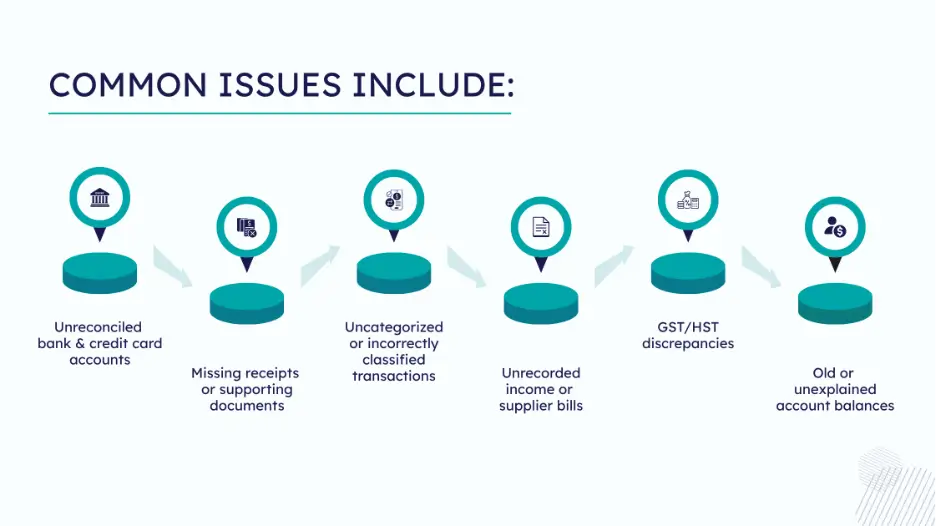
These bookkeeping mistakes before tax season can require extra review before financial records are ready for tax preparation. Reconciling books before year end gives you time to identify and resolve these issues while supporting documents are easier to locate.
A regular quarterly bookkeeping review can catch these gaps earlier and help reduce tax season stress.
How September Review Simplifies CRA Filing
Good bookkeeping does not guarantee a lower tax bill, but it can make tax preparation easier by keeping financial information organized and supported.
CRA guidance requires businesses to keep business records supporting their income and expense claims. A September review can help you:
- Locate income and expense records more easily
- Identify missing supporting documents
- Review GST/HST records early
- Investigate unusual or unexplained transactions
- Give tax preparers cleaner information
Following a small business bookkeeping checklist throughout the year also helps maintain organized records instead of rushing to rebuild information before tax preparation.
The goal is not to complete tax preparation in September. It is to have cleaner records ready when tax preparation begins.
Conclusion
September is a useful checkpoint to review your books, resolve outstanding issues, and organize supporting records before year-end tax preparation. A consistent September bookkeeping checklist can help identify gaps early, keep financial records cleaner, and reduce tax season stress.
You do not need to wait until year-end to get your bookkeeping in order. If you need support keeping your records organized and ready for tax preparation, Contact us to learn how NCSGX can help.
How NCSGX Can Help
NCSGX can help Canadian businesses keep their financial records organized, accurate, and up to date throughout the year, while providing the accounting support needed to maintain clearer financial information. By bringing greater consistency to everyday bookkeeping and keeping supporting documentation in order, businesses can spend less time on last-minute clean up and approach tax preparation with clearer financial information and greater confidence.
Frequently Asked Questions (FAQ)
Why should I start bookkeeping in September instead of waiting until year-end?
September gives you time to identify missing receipts, unreconciled transactions, and incomplete records before year-end. It is a practical review point, not a CRA-mandated deadline.
What should I review first in a September bookkeeping check?
Start with bank and credit card reconciliations, income, expenses, receipts, accounts receivable and payable, and GST/HST records. This forms a practical small business bookkeeping checklist.
Does September bookkeeping help with GST/HST filing?
Yes. Reviewing your records early can help identify missing GST/HST information and supporting documents needed for reporting and eligible ITC claims.
What are common bookkeeping mistakes that create tax season stress?
Common bookkeeping mistakes before tax season include unreconciled accounts, missing receipts, duplicate transactions, incorrect classifications, unrecorded income, and GST/HST discrepancies.
Do I need an accountant to do a September bookkeeping review?
Not necessarily. You can perform a basic review yourself, but professional support can be helpful when records are behind, complex, or contain unexplained discrepancies.
How does September bookkeeping reduce pressure at tax time?
An early review gives you more time to resolve missing records and bookkeeping issues. Regular reconciling books before year end can help reduce tax season stress.