
 USA
USA
 Canada
 Australia

Introduction
Receiving a CRA reassessment notice can raise immediate questions about what changed, why it changed, and whether your bookkeeping records support the amounts reported. A reassessment may point to missing documentation, incorrectly classified expenses, GST/HST discrepancies, unsupported deductions, or unreconciled transactions.
At NCSGX, we understand the importance of keeping Canadian business records organized, accurate, and supported by proper documentation. When a CRA review exposes gaps in the books, professional bookkeeping support can help bring records up to date and create a clearer trail for future reporting.
Key Takeaways
- A CRA reassessment notice does not automatically mean your business made an intentional error. Review what CRA changed and why.
- Start by comparing the notice of reassessment with the filed return, bookkeeping records, and supporting documents.
- Catch-up bookkeeping can help identify unreconciled accounts, missing records, GST/HST discrepancies, and other correcting bookkeeping errors that may need attention.
- If you disagree with the reassessment, understand the difference between providing information, requesting an adjustment, and filing a formal CRA notice of objection.
- When considering how to respond to a CRA reassessment, check the applicable deadline and keep a clear record of all information submitted to CRA.
Cleaning Up Your Books After a CRA Review or Reassessment Notice
Receiving a CRA reassessment notice can be stressful, especially when the amount owing is higher than expected. But the notice is also a useful signal: something in the filed information, supporting records, or CRA’s review needs a closer look.
A reassessment may expose missing documentation, incorrectly classified expenses, GST/HST errors, unreconciled transactions, unsupported deductions, inaccurate balances, or inconsistent records. The right response is not simply to make the accounting file look better. You need to understand what changed, verify the underlying transactions, and build a clear record supporting your position.
For many Canadian businesses, that means going beyond the tax return and doing a proper Bookkeeping cleanup.
What a review or reassessment notice actually means
A notice of assessment is the CRA’s assessment of a return. A Notice of Reassessment reflects a later change to an assessment. Receiving one does not automatically mean fraud or intentionally doing wrong activities. Adjustments can arise because information was missing, amounts did not match CRA’s records, a deduction was not adequately supported, or CRA reached a different conclusion about an amount.
For corporations, the normal T2 reassessment period is usually three years from the date CRA sent the original notice of assessment if the corporation was a Canadian-controlled private corporation (CCPC), and four years if it was not a CCPC. Exceptions can apply, including misrepresentation attributable to neglect, carelessness, wilful default, fraud, or certain waivers and special adjustments.
First things to do when the notice arrives
Use this checklist before changing your books or contacting CRA:
- Read the entire notice carefully.
- Identify the tax year or reporting period involved.
- Note exactly what changed: income, expenses, deductions, credits, GST/HST, interest, or penalties.
- Compare the notice with the originally filed return and accounting records.
- Review CRA’s explanation of the adjustment.
- Check every response or objection deadline.
- Gather supporting records before deciding what went wrong.
- Get professional help if the issue is significant, technical, or disputed.
Deadlines matter. For a Canadian corporation, a formal income tax objection generally must be filed within 90 days from the date of the notice of assessment or reassessment.
Why your books need a cleanup
A CRA review can reveal problems that existed well before the notice arrived. Cleaning up those issues helps establish whether the reassessment is supported by the actual transactions.| Issue | What it can cause | What to review |
| Unreconciled bank accounts | Incorrect income or expenses | Bank statements and ledger |
| Missing receipts | Unsupported deductions | Receipts and proof of payment |
| Duplicate transactions | Inflated expenses | Transaction listings |
| GST/HST discrepancies | Incorrect net tax or ITCs | GST/HST reports and invoices |
| Payroll discrepancies | Incorrect liabilities | Payroll reports and remittances |
Catch-up bookkeeping is useful when records have fallen behind or contain incomplete transactions. However, proper catch-up bookkeeping is more than entering old transactions. CRA describes Business Records as including accounting and financial documents such as ledgers, financial statements, invoices, receipts, contracts, and bank statements that support business transactions.
Step-by-step book cleanup
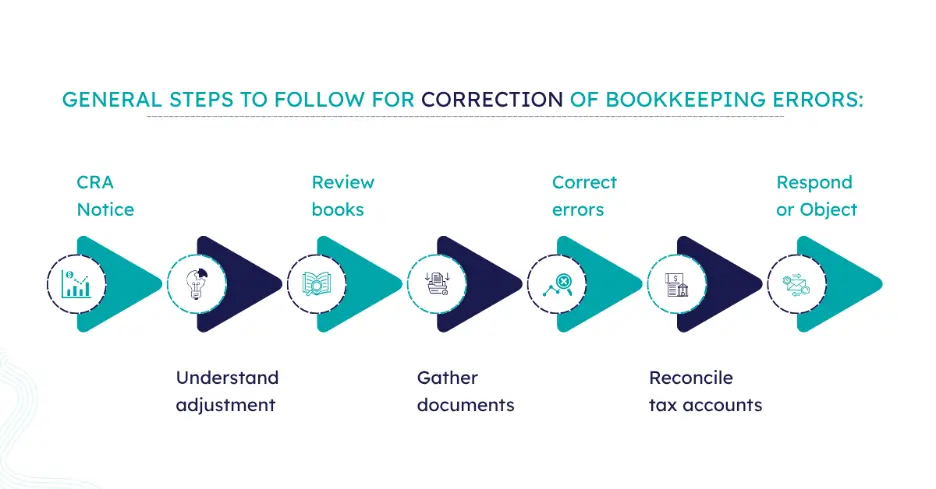
Use this workflow when correcting bookkeeping errors after a review or reassessment.
Step 1: Identify what CRA changed
Create a simple reconciliation between the original filing and the CRA adjustment. Quantify each difference.
Step 2: Reconcile the affected accounts
Review bank accounts, credit cards, GST/HST accounts, payroll liabilities, loans, A/R and A/P. An unreconciled balance can hide the transaction that caused the problem.
Step 3: Trace transactions to source documents
For material items, match the ledger entry to the invoice, receipt, contract, bank transaction, or other evidence.
Step 4: Correct bookkeeping errors
Fix duplicate entries, incorrect classifications, missing transactions, or unsupported amounts. Keep a record explaining each correction instead of simply overwriting history.
Step 5: Review GST/HST implications
Check whether sales and purchases were treated correctly and whether claimed input tax credits are supported. CRA requires GST/HST records to contain enough information to support the amounts reported and ITCs claimed.
Step 6: Reconcile tax and liability accounts
Compare the accounting balances with CRA statements and filed returns. Investigate unexplained differences.
Step 7: Document every correction
Keep notes showing what changed, why it changed, the source document, and the date of the adjustment.
Step 8: Prepare a clean review trail
Someone unfamiliar with the file should be able to follow the transaction from source document to bookkeeping entry, reconciliation, tax return, and CRA response.
Gathering and organizing your supporting documentation
The records required will depend on what CRA is reviewing. A practical documentation package may include:
- Sales and purchase invoices
- Receipts and proof of payment
- Bank and credit-card statements
- Payroll records
- GST/HST records and working papers
- Accounting ledgers and journal entries
- Financial statements
- Evidence explaining business purpose
CRA generally requires businesses to keep records and supporting documents for six years from the end of the last tax year they relate to, although certain records, such as some long-term property or corporate historical records, can have longer or indefinite retention requirements.
Responding to the CRA
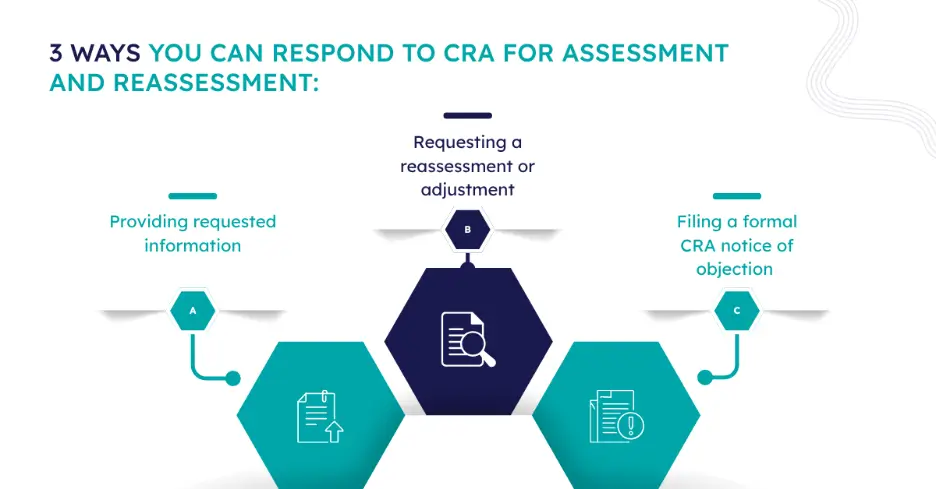
There are three situations that should be kept separate.
- Providing requested information
If CRA is conducting a review and asks for documents, provide the requested information by the stated deadline. CRA can make its decision using the information available if requested information is not provided. - Requesting a reassessment or adjustment
If you discover that a previously filed amount is wrong, the appropriate correction process depends on the return involved. For a corporation, CRA allows a business to request a reassessment of its T2 return electronically or in writing with relevant supporting information. - Filing a formal CRA notice of objection
If you disagree with an assessment or reassessment, aCRA notice of objection is the formal dispute mechanism. For corporations, the general deadline is 90 days from the date of the notice. The objection should explain the disputed issue, facts, reasons, and supporting documentation. Corporations can generally file a Formal objection online through My Business Account or, where an authorized representative is involved, through Represent a client.
- Providing requested information
Three ways you can respond to CRA for assessment and reassessment:
- Providing requested information
- Requesting a reassessment or adjustment
- Filing a formal CRA notice of objection
Keeping it from happening again
A CRA-ready bookkeeping routine is usually less expensive and less disruptive than reconstructing several years of records.
Focus on consistency:
- Reconcile bank and credit card accounts monthly.
- Review GST/HST payable and input tax credit accounts regularly.
- Store invoices and receipts in organized digital folders.
- Keep personal and business spending separately.
- Review A/R and A/P balances each month.
Conclusion
A CRA review or reassessment is a good reason to take a closer look at your bookkeeping, supporting documents, and reporting processes. By addressing discrepancies, documenting corrections, and keeping your records organized, you can create a stronger foundation for future filings and CRA correspondence. If you need support bringing your books up to date or reviewing bookkeeping gaps, contact us to discuss your requirements with NCSGX.
How NCSGX can help
NCSGX can help Canadian businesses bring their bookkeeping up to date after a CRA review or reassessment by organizing financial records, reconciling accounts, reviewing GST/HST and expense entries, and identifying gaps in supporting documentation. The goal is to create accurate, well-organized books that make it easier to understand past adjustments and maintain reliable records for future reporting.
Frequently Asked Questions (FAQ)
1. What does a CRA reassessment notice mean?
A CRA reassessment notice means CRA has changed an amount previously assessed on a tax return. It may affect tax owing, interest, penalties, or a refund.
2. What should I do after receiving a CRA reassessment notice?
Review the notice of reassessment, identify what changed, and compare it with your return and bookkeeping records. Gather supporting documents and check the applicable response or objection deadline.
3. Why should I clean up my books after a CRA reassessment?
A reassessment may reveal unreconciled accounts, missing receipts, GST/HST discrepancies, or other correcting bookkeeping errors. Catch-up bookkeeping can help bring incomplete or inaccurate records up to date.
4. What documents should I gather when responding to the CRA?
Gather relevant invoices, receipts, bank statements, contracts, payroll records, GST/HST records, accounting ledgers, and proof of payment. Keep documents that support the transaction, amount, and tax treatment.
5. Can I correct bookkeeping errors after receiving a notice of reassessment?
Yes. Correcting bookkeeping errors may help establish the accurate amounts, but changing your books does not automatically reverse a CRA adjustment.
6. How do I respond if I disagree with a CRA reassessment?
Review the adjustment and gather evidence supporting your position. Depending on the circumstances, you may provide additional information, request a reassessment, or file a formal CRA notice of objection within the applicable deadline.