
 USA
USA
 Canada
 Australia

Introduction
Accounts Payable and Receivable are essential for maintaining liquidity and supporting sustainable growth. Cash flow management is considered one of the most important factors influencing business sustainability and growth, according to the Business Development Bank of CANADA, Delayed customer payments and poorly managed supplier obligations can create financial pressure even when profits look good on paper.
At NCSGX, we help businesses streamline their financial operations and improve cash flow visibility. In this guide, we’ll explain the difference between accounts payable and receivable, how they affect your cash flow forecast, and practical strategies to keep cash moving efficiently throughout your business.
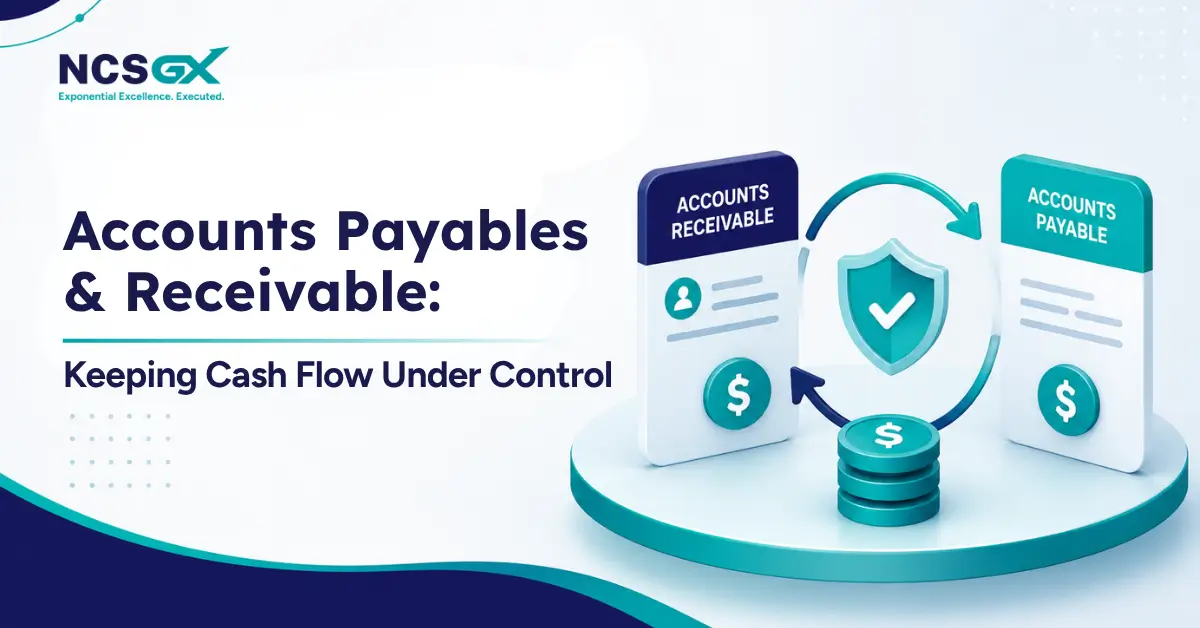
Accounts Payables & Receivable: Keeping Cash Flow Under Control
Many profitable companies struggle not because they lack revenue, but because they run short of cash when it is needed most. You can have strong sales, loyal customers, and a solid product, but if money isn’t flowing in and out at the right times, your business can still hit a wall.
For Canadian small businesses and growing SMEs, managing accounts payable and receivable is one of the most important skills to master. These two areas sit at the heart of your cash flow, determining whether you have the funds to pay employees, cover rent, invest in growth, or maintain day-to-day operations.
Yet many business owners treat AP and AR as a back-office task something to deal with when invoices pile up or suppliers start calling. That reactive approach can lead to cash flow shortages, missed opportunities, and strained relationships with the people you rely on most.
This guide breaks down what accounts payable and receivable really mean, how they affect your cash flow, and practical steps you can take to stay in control.
Key Takeaways
- Accounts payable (AP) is money your business owes, while accounts receivable (AR) is money customers owe your business.
- Managing AP and AR effectively helps maintain healthy cash flow and reduces the risk of cash shortages.
- Clear invoice payment terms, timely invoicing, and regular follow-ups can improve accounts receivable collections.
- Strategic accounts payable management helps preserve working capital while maintaining strong supplier relationships.
- A regularly updated cash flow forecast helps businesses anticipate cash gaps, plan expenses, and make informed financial decisions.
What Are Accounts Payable and Receivable?
Let’s start with the basics.
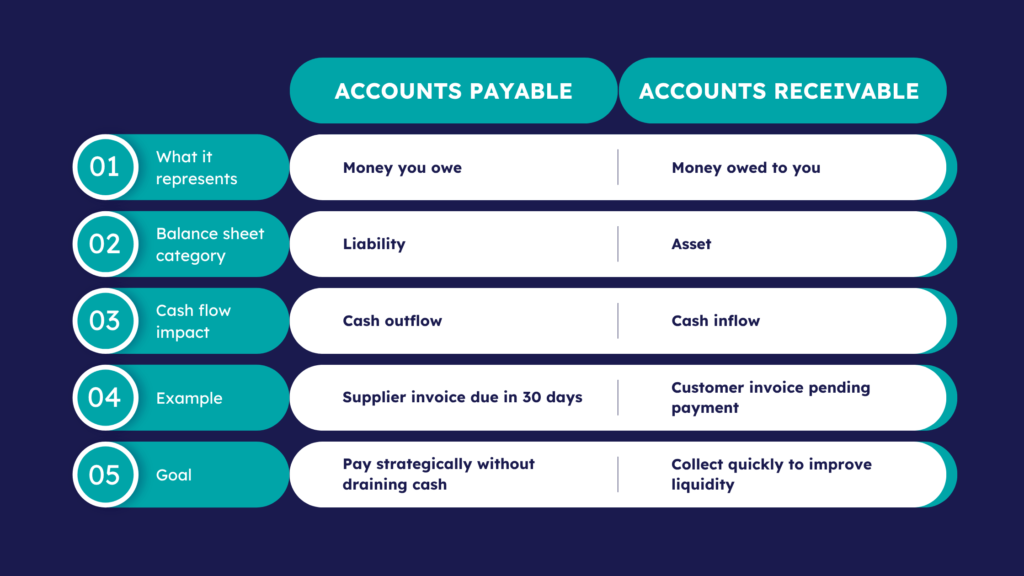
Accounts payable (AP) represents money your business owes to others. Think about supplier invoices, utility bills, rent, contractor fees, any short-term obligation you need to pay.
Accounts receivable (AR) is the opposite: money others owe you. When you sell products or services on credit and send an invoice, that unpaid amount sits in your receivables until the customer pays.
A simple example: You run a landscaping company. You buy $2,000 worth of plants from a nursery on 30-day terms; that’s accounts payable. Meanwhile, you complete a $5,000 job for a commercial client who’ll pay within 45 days; that’s accounts receivable.
Both are normal parts of doing business. But how you manage the timing and amounts of each directly shapes whether you have cash available when you need it.
What’s the Difference Between Accounts Payable and Receivable?
Understanding the difference between accounts payable and receivable comes down to one key distinction: direction of the cash flow.
How Do Accounts Payable and Receivable Affect Your Cash Flow?
Your accounts payable and receivable are the two biggest levers controlling your working capital, the money available for day-to-day operations.
Positive cash flow happens when you collect receivables faster than you pay out to suppliers. Money flows in before it flows out, giving you a breathing room.
Negative cash flow happens when you pay suppliers before customers pay you. You’re essentially financing their purchases with your own cash.
The timing gap matters enormously. According to Intuit QuickBooks research, 61% of small businesses globally struggle with cash flow, and late customer payments are one of the top causes.
The risks of poor AP and AR management include:
- Running out of cash to cover payroll or rent
- Missing supplier payment deadlines and damaging relationships
- Paying late fees or losing early-payment discounts
- Being unable to take on new projects or orders
- Relying on expensive short-term financing to bridge gaps
Even profitable businesses fail because of cash flow mismanagement. Revenue on paper doesn’t pay bills; cash in the bank does.
How to Manage Accounts Receivable So You Get Paid Faster
Getting money in the door quickly is half the battle. Here are practical ways to improve your AR process:
- Set clear invoice payment terms upfront. Whether it’s Net 15, Net 30, or due on receipt, make sure customers know when payment is expected before work begins. Put it in contracts, quotes, and invoices.
- Send invoices immediately. Don’t wait until month-end. Invoice as soon as work is complete or products are delivered. Delays on your end translate to delays in getting paid.
- Offer multiple payment methods. Accept credit cards, e-transfers, and online payments. The easier you make it to pay, the faster payments arrive.
- Automate payment reminders. Use accounting software to send gentle reminders before due dates and follow-ups. Consistent communication reduces overdue accounts.
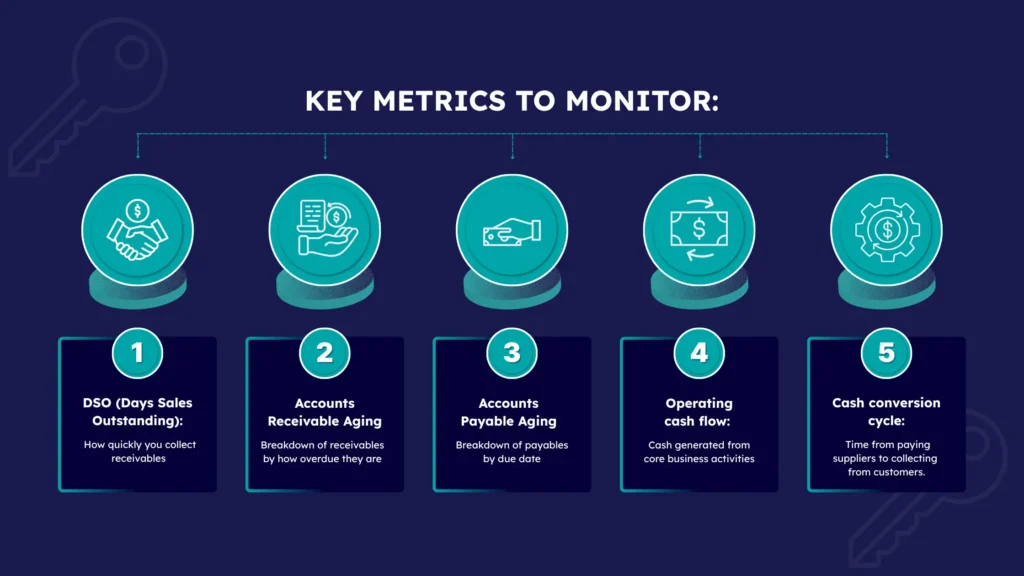
- Monitor Days Sales Outstanding (DSO). DSO measures how long it takes to collect payment on average. A rising DSO signals trouble, track it monthly and investigate delays.
- Communicate early on issues. If a customer is struggling, reach out before the invoice goes overdue. You may be able to arrange a payment plan that keeps cash flowing.
How to Manage Accounts Payable Without Draining Cash
Smart accounts payable management isn’t about paying as late as possible; it’s about paying strategically.
Strategic timing: Understand your payment terms and use them. If an invoice is due in 30 days, you don’t need to pay on day one unless there’s a benefit.
Negotiate with suppliers. If cash is tight, ask for extended terms. Many suppliers will agree to Net 45 or Net 60 for reliable customers, especially if you communicate openly.
Consider early payment discounts. Some suppliers offer 2% off for paying within 10 days (often written as “2/10 Net 30”). Calculate whether the discount is worth giving up the cash sooner. A 2% discount for paying 20 days early equals roughly 36% annualized, often a good deal.
Avoid late payment of penalties. These erode margins and damage supplier relationships. Set up payment reminders or schedule payments in advance to stay on track.
Maintain supplier relationships. Paying reliably builds trust. When you need flexibility, extended terms, rush orders, or priority service, good relationships pay off.
Example: A Toronto-based manufacturer negotiated Net 60 terms with their main materials supplier during a slow season. That extra 30 days of float let them complete two major projects without taking on a line of credit.
How to Forecast and Monitor Your Cash Flow
Maintaining an accurate cash flow forecast is also recommended by the Business Development Bank of Canada (BDC), which highlights forecasting as a key tool for managing growth and reducing financial risk. It projects money coming in and going out over the coming weeks or months, so you can spot shortfalls before they become crises.
Why forecasting matters: Effective forecasting helps businesses plan for future cash inflows and outflows. Without it, delayed customer payments can create cash shortages, making it difficult to meet supplier invoices, payroll, and other financial commitments on time.
How to build a simple cash flow forecast:
- Start with your current cash balance. What’s in the bank today?
- Estimate cash inflows. Review your AR aging report. When do you realistically expect payments to arrive? Include other incomes like loans or investment.
- Estimate cash outflows. List all expected expenses: supplier payments, payroll, rent, loan payments, taxes. Use your AP aging report and recurring costs.
- Calculate the net for each period. Inflows minus outflows for each week or month.
- Project your ending cash balance. Starting cash plus net flow equals ending balance for that period.
- Review and update regularly. Forecasts are only useful if they reflect reality. Update weekly or bi-weekly.
Conclusion
While profitability is important, strong cash flow is what keeps a business running day to day. Effective accounts payable and receivable management enables businesses to maintain liquidity, meet financial obligations, and support sustainable growth. A proactive approach to AP and AR can help reduce financial risk and create a stronger foundation for long-term success.
If late payments, supplier deadlines, or unclear cash flow are slowing your business down, NCSGX can help you bring AP and AR under control. Contact our team to discuss bookkeeping and cash flow support for your business.
How NCSGX Helps Canadian Businesses Keep AP and AR Under Control
Managing accounts payable and receivable internally can become time-consuming as businesses grow.
NCSGX helps Canadian businesses streamline financial operations by providing support for:
- Accounts receivable tracking
- Invoice processing
- Accounts payable management
- Cash flow reporting
- Financial data accuracy
- Back-office accounting support
With greater visibility into incoming and outgoing cash, businesses can make informed decisions, improve working capital, and focus on growth with confidence.
Frequently Asked Questions (FAQ)
1. What is the main difference between accounts payable and accounts receivable?
Accounts payable refers to the money your business owes to suppliers or vendors for purchases made on credit. Accounts receivable refers to the money customers owe your business for products or services you’ve already delivered. In simple terms, AP is money going out, while AR is money coming in.
2. How can small businesses improve their accounts receivable process?
Small businesses can improve accounts receivable by sending invoices promptly, offering multiple payment options, setting clear payment terms, automating payment reminders, and regularly monitoring overdue invoices. These practices help reduce payment delays and improve cash flow.
3. Is accounts receivable an asset or income?
Accounts receivable is an asset. It represents money customers owe your business for goods or services already provided. Revenue is recognized when the sale occurs, while accounts receivable record the outstanding amount yet to be collected.
4. What is a healthy DSO for a small business?
A healthy DSO varies by industry, but many small businesses aim for a DSO between 30 and 45 days. Lower DSO generally indicates faster collections and stronger cash flow.
5. Should I always pay suppliers early?
Not necessarily. While early payment discounts can be valuable, paying too early may reduce available cash. Businesses should evaluate payment terms, cash reserves, and discount opportunities before deciding.